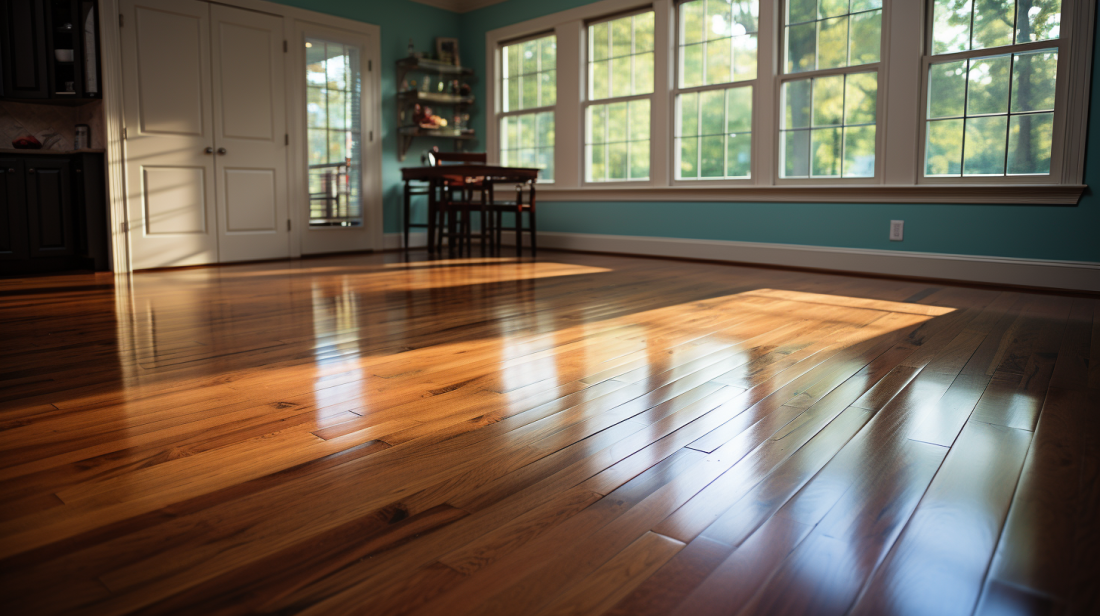
Quality hardwood floor installation brings lasting value to your home.
Our step-by-step guide transforms complex techniques into manageable moves, so you can tackle installation yourself.
No contractor needed – just your determination and our expert installation tips. Your perfect floors are waiting – let’s build them.
Key Notes
- Proper acclimation needs 72 hours minimum – rushing this step leads to warped boards and costly repairs.
- Harder wood flooring dominates in Raleigh’s climate, outperforming softer woods against humidity swings.
- Professional-grade results hinge on subfloor prep to level surfaces and prevent squeaks and loose boards.
Preparation Before Installation
Before reaching for your toolkit, there’s a bit of prep work to be done:
1. Assessing and Preparing the Subfloor
A solid foundation matters. The subfloor for your hardwood floor installation needs to be clean, dry, and level.
Whether you have plywood or concrete, uneven surfaces cause major problems later.
Use a long level to check for dips or high spots. Sand down bumps, fill low areas, and remove any debris before moving on.
2. Acclimating the Hardwood
Wood reacts to humidity. Skip this step, and your floors swell or shrink after installation.
Stack the planks in the room where they’ll be installed, leaving space for airflow. Let them sit for at least 72 hours.
If you’re in a humid area, choosing the best hardwood for Raleigh’s climate – like oak – helps prevent future issues.
3. Gather Your Tools and Materials
You need the right hardwood floor installation tools to get the job done.
Here’s a quick checklist:
| Tool | Purpose |
|---|---|
| Measuring tape | For room measurements |
| Moisture meter | To check humidity levels |
| Nail gun or flooring stapler | To secure the flooring |
| Rubber mallet | For tapping planks into place |
| Underlayment | To be covered next |
| Saw | For cutting planks |
| Spacers | To maintain expansion gaps |
Step-by-Step Installation Process
Follow these steps when installing your hardwood floors to set yourself up for a successful DIY project:
1. Plan Your Layout
- Decide on the direction you want your hardwood floors. Running boards parallel to the longest wall usually look best.
- Measure the room and mark guidelines.
2. Install the First Rows
- Start along one wall, leaving a ¾-inch expansion gap.
- Nail or glue the first row securely.
3. Continue Installing
- Stagger the planks for a natural look.
- Tap boards into place with a mallet.
- Cut planks as needed for a snug fit.
4. Finishing Up
- Install baseboards and transition strips.
- Clean the surface and check for loose boards.
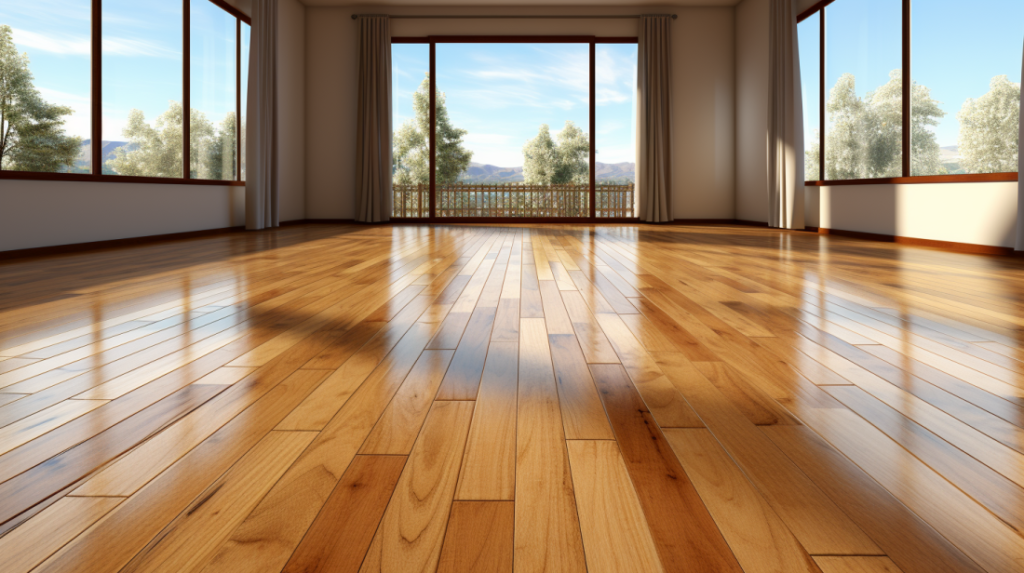
Common Installation Issues and Fixes
Here are some common installation issues homeowners run into when installing hardwood floors themselves:
Gaps Between Planks
- Problem: Dry air shrinks wood, leaving unsightly gaps.
- Fix: Maintain indoor humidity between 35-55%. Use a humidifier in dry months.
Cupping or Warping
- Problem: Excess moisture causes planks to curl.
- Fix: Ensure proper moisture barriers and control humidity levels.
Squeaky Floors
- Problem: Boards move due to loose fasteners.
- Fix: Secure loose boards with additional nails or screws.
Uneven Flooring
- Problem: Poor subfloor preparation leads to unstable planks.
- Fix: Level the subfloor for hardwood floor installation before starting.
Choosing the Right Hardwood Flooring
Choosing the right hardwood flooring doesn’t have to be complicated – it’s all about finding what works for your home.
Whether you’re after something durable, stylish, or both, we’ve got the tips to help you decide:
Types of Hardwood: Solid vs. Engineered
- Solid Hardwood: ¾-inch thick, can be refinished multiple times. Best for rooms above ground level.
- Engineered Hardwood: Multiple layers of wood pressed together. Handles moisture better than solid wood. Ideal for basements.
Best Hardwood for Raleigh Climate
Humidity swings affect flooring, especially in places like Raleigh, where the weather can fluctuate throughout the year.
Hardwoods like oak, hickory, and maple handle temperature changes better than softer woods like pine, making them more stable and less likely to warp or shrink with the seasons.
Choosing these sturdier options will help ensure your floor lasts longer and maintains its appearance despite the local climate conditions.
Post-Installation Care and Maintenance
Keep your hardwood floors in good condition:
Immediate Steps
After installation, wait at least 24 hours before moving furniture back onto the floors to allow them to settle.
It’s also important to keep pets and heavy foot traffic off freshly installed floors during this time to avoid any damage.
Long-Term Maintenance
To protect your floors over time, use felt pads under furniture to prevent scratches. Keeping the humidity stable in your home will also help avoid issues like shrinking or swelling.
Regularly sweeping or vacuuming your floors will help remove dirt and debris, keeping them looking their best.
Frequently Asked Questions
Can I install hardwood floors myself?
Yes, you can install hardwood floors yourself, but you need patience and the right hardwood floor installation tools. If you’re not comfortable handling saws and nail guns, consider professional installation.
Do I need underlayment for hardwood flooring?
Yes, especially over concrete. Moisture barriers protect against humidity damage, while foam underlayments reduce noise and add comfort. If you’re installing over plywood, underlayment isn’t required but is still a good idea for cushioning.
How do I install hardwood flooring on stairs?
When installing hardwood flooring on stairs use adhesive and nails for a secure fit. Start with the risers, then install the treads.
Conclusion
Installing hardwood floors adds lasting beauty and value to your home. Whether you choose to tackle the project yourself or seek professional help, proper preparation makes all the difference.
From selecting climate-appropriate wood and allowing proper acclimation time to ensuring your subfloor is perfectly level, each step builds toward a stunning result. Regular maintenance keeps your investment looking beautiful for years to come.
Ready to start your hardwood flooring project? Our expert team brings years of installation experience to every job. Contact us today for a free quote and learn how we can help create the perfect hardwood floors for your home.